
Why Beginner Bonsai Die: A Diagnosis-First Framework
Most beginner bonsai fail in the first 90 days due to light, water, substrate, or shock. Use this diagnosis-first order to fix the right thing fast.
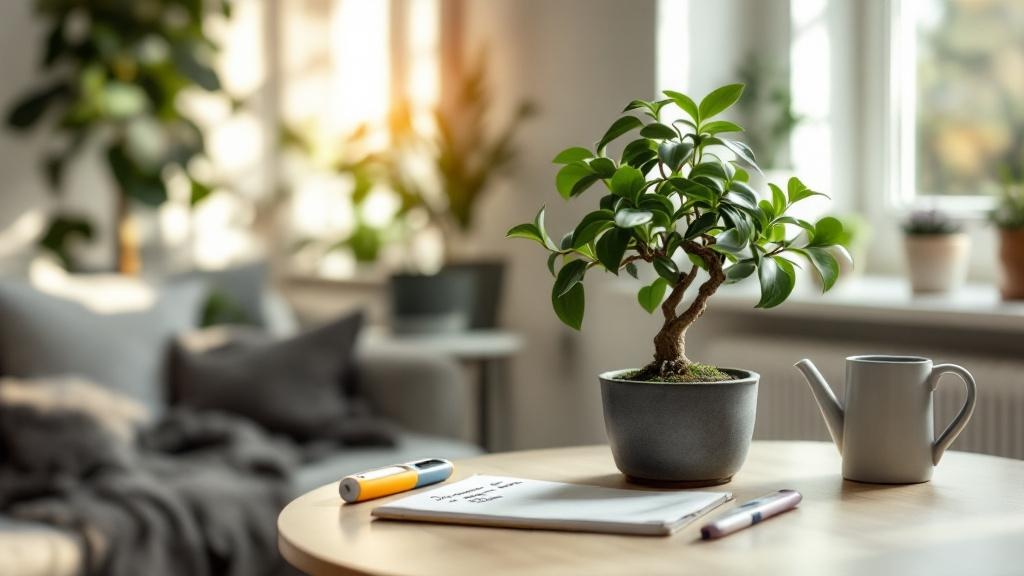
Stop Guessing: The First-90-Day “Failure Window” for Beginner Bonsai
New owners often blame themselves when a beginner bonsai drops leaves or browns out—but the real issue is usually a predictable mismatch between the tree’s needs and the home it lands in. In bonsai basics, the first 90 days are the highest-risk period because the plant is adapting to new light, watering rhythms, and airflow, often after shipping or a gift handoff. Without a quick plant health read, people change everything at once (more water, less water, repotting, fertilizer), and the tree declines faster.
A diagnosis-first framework keeps troubleshooting simple: (1) confirm light, (2) verify watering and drainage, (3) assess substrate quality and root oxygen, then (4) account for post-purchase shock and pests. This order matters because light drives water use, and water behavior reveals whether the substrate is working. Treat it like care fundamentals triage: make one evidence-based correction, then monitor for 7–10 days before stacking changes. That’s how you turn bonsai care from guesswork into repeatable decision-making.
Step 1–2: Light Mismatch and Watering Errors (The Two Biggest Root Causes)
Step 1: Light mismatch. Many beginner bonsai die because they’re placed where humans feel comfortable, not where trees can photosynthesize. Symptoms show up fast: leggy growth and pale leaves (too little light), crispy leaf edges and scorched patches (too much direct sun too quickly), or sudden leaf drop after moving locations repeatedly. Troubleshooting starts with labeling your spot honestly: how many hours of direct sun, and from which window direction? If it’s an “indoor” species like ficus, aim for the brightest window you have, then stabilize the location for two weeks.
Step 2: Watering errors. Overwatering is usually frequency, not volume; underwatering is usually incomplete saturation. Test before you water: feel the top 1–2 cm of soil and lift the pot—light pots dry faster. When you do water, water thoroughly until it drains freely, then stop.
In plant health terms, the signal you want is consistent dry-down: moist to slightly dry, then a full soak. That single rhythm fixes more beginner bonsai troubleshooting cases than any fertilizer ever will.
Step 3–4: Substrate, Roots, and Post-Purchase Shock—When the Problem Isn’t You
Step 3: Substrate and drainage. If water pools on top, drains slowly, or the soil stays wet for days, the roots may be oxygen-starved—one of the most common hidden failure modes in beginner bonsai. Dense, peat-heavy mixes can look fine but behave like a sponge, especially indoors. A quick check: after watering, the pot should feel noticeably lighter within 24–48 hours (species and conditions vary). If it doesn’t, pause fertilizing, increase airflow/light slightly, and consider a season-appropriate repot into a free-draining bonsai substrate when the tree is stable.
Step 4: Post-purchase shock (and sometimes pests). Leaf drop after shipping, a move, or a gift event is common—especially if the tree goes from greenhouse humidity to dry indoor air. Stabilize conditions, avoid pruning/repotting immediately, and watch for new buds rather than counting fallen leaves. If you see sticky residue, webbing, or speckled leaves, isolate and treat.
This is where care fundamentals and follow-through matter: clear care cards, species-matched bundles, and a short support window (like CalmCanopy Bonsai provides) help you make the right correction early—before decline becomes irreversible.
Stop Guessing: The First-90-Day “Failure Window” for Beginner Bonsai
New owners often blame themselves when a beginner bonsai drops leaves or browns out—but the real issue is usually a predictable mismatch between the tree’s needs and the home it lands in. In bonsai basics, the first 90 days are the highest-risk period because the plant is adapting to new light, watering rhythms, and airflow, often after shipping or a gift handoff. Without a quick plant health read, people change everything at once (more water, less water, repotting, fertilizer), and the tree declines faster.
A diagnosis-first framework keeps troubleshooting simple: (1) confirm light, (2) verify watering and drainage, (3) assess substrate quality and root oxygen, then (4) account for post-purchase shock and pests. This order matters because light drives water use, and water behavior reveals whether the substrate is working. Treat it like care fundamentals triage: make one evidence-based correction, then monitor for 7–10 days before stacking changes. That’s how you turn bonsai care from guesswork into repeatable decision-making.
Step 1–2: Light Mismatch and Watering Errors (The Two Biggest Root Causes)
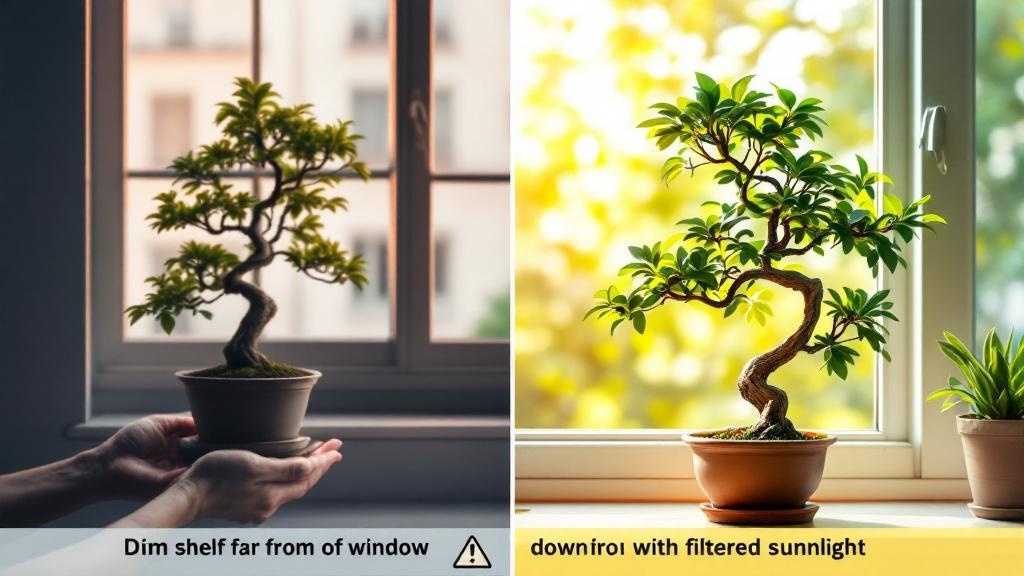
Step 1: Light mismatch. Many beginner bonsai die because they’re placed where humans feel comfortable, not where trees can photosynthesize. Symptoms show up fast: leggy growth and pale leaves (too little light), crispy leaf edges and scorched patches (too much direct sun too quickly), or sudden leaf drop after moving locations repeatedly. Troubleshooting starts with labeling your spot honestly: how many hours of direct sun, and from which window direction? If it’s an “indoor” species like ficus, aim for the brightest window you have, then stabilize the location for two weeks.
Step 2: Watering errors. Overwatering is usually frequency, not volume; underwatering is usually incomplete saturation. Test before you water: feel the top 1–2 cm of soil and lift the pot—light pots dry faster. When you do water, water thoroughly until it drains freely, then stop.
In plant health terms, the signal you want is consistent dry-down: moist to slightly dry, then a full soak. That single rhythm fixes more beginner bonsai troubleshooting cases than any fertilizer ever will.
Step 3–4: Substrate, Roots, and Post-Purchase Shock—When the Problem Isn’t You
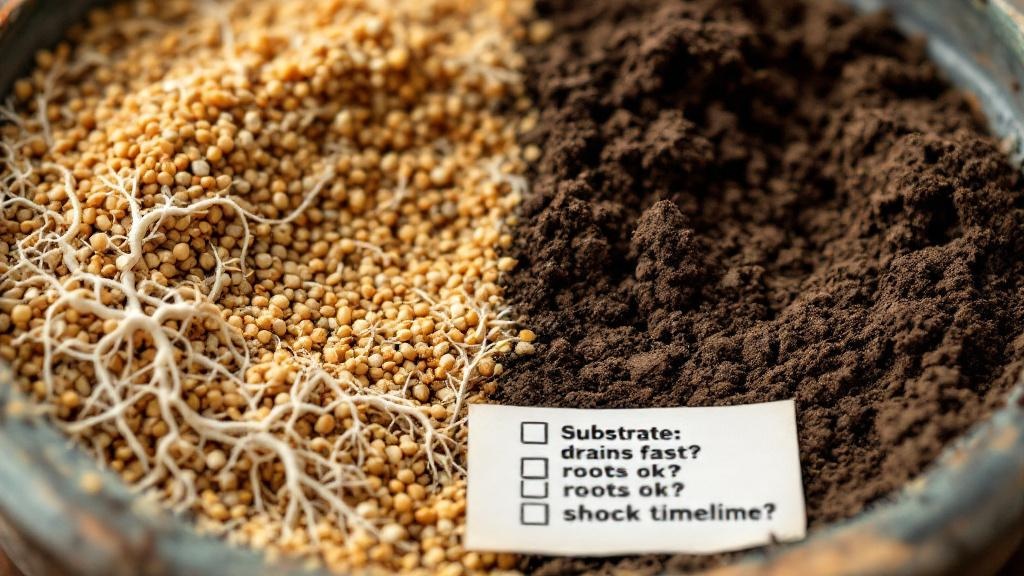
Step 3: Substrate and drainage. If water pools on top, drains slowly, or the soil stays wet for days, the roots may be oxygen-starved—one of the most common hidden failure modes in beginner bonsai. Dense, peat-heavy mixes can look fine but behave like a sponge, especially indoors. A quick check: after watering, the pot should feel noticeably lighter within 24–48 hours (species and conditions vary). If it doesn’t, pause fertilizing, increase airflow/light slightly, and consider a season-appropriate repot into a free-draining bonsai substrate when the tree is stable.
Step 4: Post-purchase shock (and sometimes pests). Leaf drop after shipping, a move, or a gift event is common—especially if the tree goes from greenhouse humidity to dry indoor air. Stabilize conditions, avoid pruning/repotting immediately, and watch for new buds rather than counting fallen leaves. If you see sticky residue, webbing, or speckled leaves, isolate and treat.
This is where care fundamentals and follow-through matter: clear care cards, species-matched bundles, and a short support window (like CalmCanopy Bonsai provides) help you make the right correction early—before decline becomes irreversible.